
Friedrich Hayek
Quotes & Wisdom
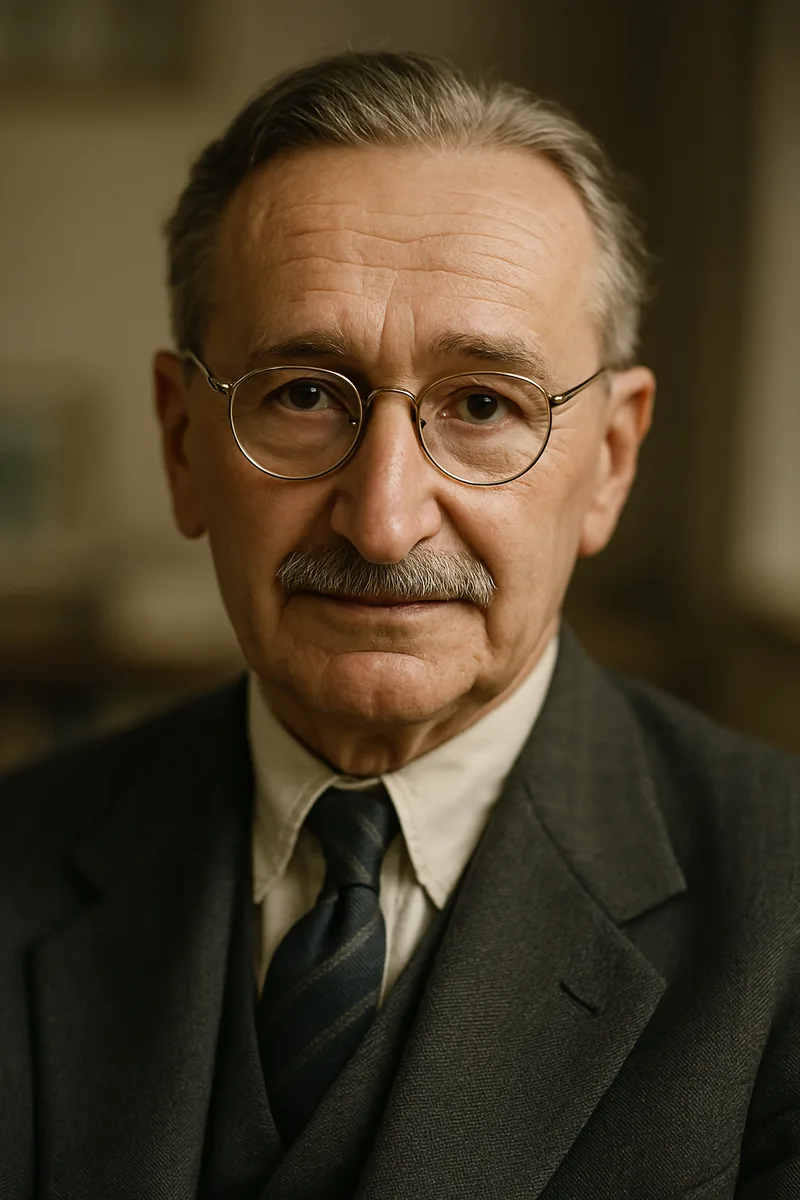
Friedrich Hayek: The Champion of Spontaneous Order
Friedrich August von Hayek was the twentieth century's most rigorous defender of individual liberty, free markets, and the rule of law. Born in Vienna in 1899, he witnessed firsthand the collapse of the Austro-Hungarian Empire, the rise of socialism and fascism, and the intellectual battle over whether economies should be centrally planned or left to the spontaneous order of markets. His 1944 book The Road to Serfdom - a warning that central planning leads inexorably to tyranny - became one of the most influential works of political philosophy ever published. Awarded the Nobel Prize in Economics in 1974, Hayek argued throughout his career that the knowledge necessary to coordinate a complex economy is dispersed among millions of individuals and can never be concentrated in a central authority.
Context & Background
Friedrich August von Hayek was born on May 8, 1899, in Vienna, the capital of the Austro-Hungarian Empire, into an intellectually distinguished family. His grandfather was a botanist, his father a physician with academic interests, and his cousin was the philosopher Ludwig Wittgenstein. Vienna before World War I was one of the great intellectual capitals of Europe - home to Freud, Mahler, Klimt, and the Vienna Circle of logical positivists.
The catastrophe of World War I shattered this world. Hayek served in the Austrian artillery on the Italian front, an experience that left him deeply skeptical of centralized authority and nationalistic enthusiasm. He returned to a Vienna transformed: the empire had collapsed, the economy was in ruins, and radical political ideologies - socialism, communism, and eventually fascism - competed for allegiance. Hayek studied law and economics at the University of Vienna, where he encountered the Austrian school of economics and its emphasis on individual action, subjective value, and the impossibility of economic calculation under socialism.
In the 1930s, Hayek moved to the London School of Economics, where he engaged in a famous debate with John Maynard Keynes over the causes and cures of the Great Depression. Keynes argued for government spending to stimulate demand; Hayek argued that such intervention would distort the price system and create worse problems in the long run. Keynes won the political argument - his ideas shaped postwar economic policy - but Hayek's critique never lost its force and experienced a dramatic revival in the 1970s and 1980s.
The Road to Serfdom (1944) was written during World War II as a warning to the British public that the centralized economic planning being advocated by socialists would lead, step by step, to the destruction of individual freedom. Hayek argued that economic freedom and political freedom are inseparable - once the state controls economic decisions, it must inevitably control personal decisions as well. The book was dedicated "to the socialists of all parties," reflecting Hayek's conviction that well-intentioned planners were the most dangerous threat to liberty.
The book was a sensation, serialized in Reader's Digest and debated across the English-speaking world. It made Hayek famous and controversial. Critics accused him of exaggeration and ideological rigidity; admirers saw him as a prophet. Margaret Thatcher reportedly carried a copy of Hayek's The Constitution of Liberty in her handbag and once slammed it on a table, declaring "This is what we believe."
Hayek's most original intellectual contribution is his theory of spontaneous order - the idea that complex social institutions (markets, language, law, customs) emerge not from deliberate design but from the voluntary interactions of millions of individuals, each acting on local knowledge. This insight is developed most fully in his 1945 essay "The Use of Knowledge in Society," which argues that the knowledge necessary to coordinate an economy is dispersed among all participants and cannot be gathered by any central authority. Prices serve as signals that communicate this dispersed knowledge, enabling coordination without a coordinator.
This "knowledge problem" is Hayek's most devastating argument against central planning: no planner, no matter how intelligent or well-intentioned, can possess the knowledge that the price system aggregates automatically.
Hayek suffered from depression and hearing loss throughout his life. He was a keen mountaineer in his youth and maintained a love of the Austrian Alps. His personal life included a controversial divorce and remarriage that strained his relationships. He was awarded the Nobel Prize in Economics in 1974 - shared, ironically, with Gunnar Myrdal, a Swedish social democrat whose views were nearly opposite to his own. He wrote on subjects far beyond economics, including psychology (The Sensory Order, 1952), legal philosophy (The Constitution of Liberty, 1960), and the theory of cultural evolution. He lived to see the fall of the Berlin Wall in 1989, which he interpreted as vindication of his lifelong arguments against socialism. He died in Freiburg, Germany, on March 23, 1992, at ninety-two.