Benjamin Graham
Quotes & Wisdom

Benjamin Graham: The Father of Value Investing
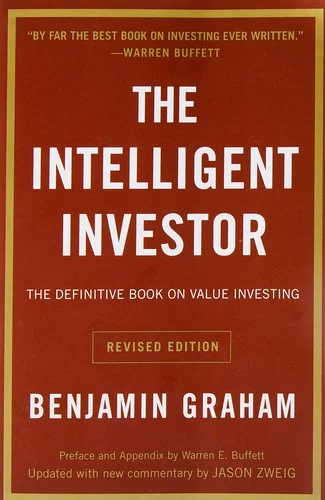
Benjamin Graham created the intellectual framework that transformed stock market speculation into disciplined investment analysis. Born in London in 1894 and raised in New York after his family emigrated, he graduated from Columbia University and entered Wall Street, where he developed the principles of value investing - buying securities for less than their intrinsic worth, demanding a margin of safety, and treating the market's mood swings as opportunities rather than guides. His books Security Analysis (1934) and The Intelligent Investor (1949) trained generations of investors, including his most famous student, Warren Buffett, who calls The Intelligent Investor "the best book on investing ever written." Graham proved that rational analysis could beat emotional speculation.
Context & Background
Benjamin Graham was born Benjamin Grossbaum on May 9, 1894, in London, England. His family emigrated to New York City when he was an infant, and his father operated a successful importing business. When his father died in 1903, the family fell into poverty - an experience that gave Graham a lifelong preoccupation with financial security and the dangers of economic reversal. His mother lost the family savings in the stock market crash of 1907, a formative lesson in the risks of speculation.
Despite financial hardship, Graham excelled academically, graduating from Columbia University in 1914 as salutatorian. He was offered teaching positions in three departments - English, mathematics, and philosophy - but chose to enter Wall Street, where he began as a clerk and quickly rose to analyst and portfolio manager. The financial world Graham entered was largely unregulated, with minimal disclosure requirements and rampant stock manipulation. The distinction between investment and speculation was blurry at best.
The crash of 1929 and the Great Depression devastated Graham's investment partnerships, nearly wiping him out. This experience transformed his approach to investing, convincing him that the key to successful investment was not predicting the future but protecting against disaster. The Securities Act of 1933 and the Securities Exchange Act of 1934 - which established the SEC and required financial disclosure - created the informational environment that made Graham's analytical methods practical.
Graham's two masterworks established the conceptual vocabulary of modern investing. Security Analysis (1934), co-authored with David Dodd, provided a systematic framework for analyzing stocks and bonds based on financial statements. The Intelligent Investor (1949), aimed at individual investors, distilled these principles into accessible wisdom.
His most enduring concept is "Mr. Market" - an imaginary business partner who shows up every day offering to buy your shares or sell you his, sometimes at rational prices and sometimes at absurd ones. The intelligent investor's job is not to follow Mr. Market's moods but to take advantage of them, buying when Mr. Market is panicking and selling (or standing aside) when he is euphoric. This personification of market psychology remains the most powerful antidote to emotional investing ever devised.
Equally important is Graham's concept of the "margin of safety" - the principle that one should only invest when the price is significantly below the calculated intrinsic value, providing a buffer against error in analysis or unforeseen negative events. This principle distinguishes investment from speculation and remains the foundation of value investing.
Graham taught at Columbia Business School from 1928 to 1957, training a generation of investors who became enormously successful by applying his methods. His most famous student, Warren Buffett, enrolled in Graham's class in 1950 and later worked for Graham's investment firm, Graham-Newman Corporation. Buffett has repeatedly credited Graham with providing the intellectual framework that made his own career possible, calling him "the second most influential person in my life" after his own father.
Yet Graham's legacy extends beyond any single student. The entire field of fundamental analysis - evaluating companies based on their financial statements, earnings power, and asset values rather than stock price trends - flows from Graham's work.
Graham was a polymath who spoke fluent Greek and Latin, translated Spanish poetry, and wrote a Broadway play (Baby Pompadour, which ran briefly in 1934). He was an accomplished amateur dancer and reportedly had a complicated personal life with multiple marriages and relationships. He spent his later years in Aix-en-Provence, France, and La Jolla, California, pursuing intellectual interests far removed from Wall Street. He proposed a commodity-reserve currency system as an alternative to gold and fiat money. He died in 1976 in Aix-en-Provence at the age of eighty-two. His investment firm, Graham-Newman Corporation, achieved an average annual return of approximately 20% over its twenty-year life - a record that validated his methods and inspired the value investing movement that continues to this day.